THT RESOURCE,JUST FOCUS ON THE FILED OF MUSICAL MOVEMENT,
The mechanical music movement is a timeless classic with a history spanning hundreds of years. It originated from the British royal family, initially designed as large-scale installations. As the Swiss watchmaking industry flourished in the following years, it optimized mechanical music movements drastically — downsizing their structure and laying a solid foundation for mass consumer use.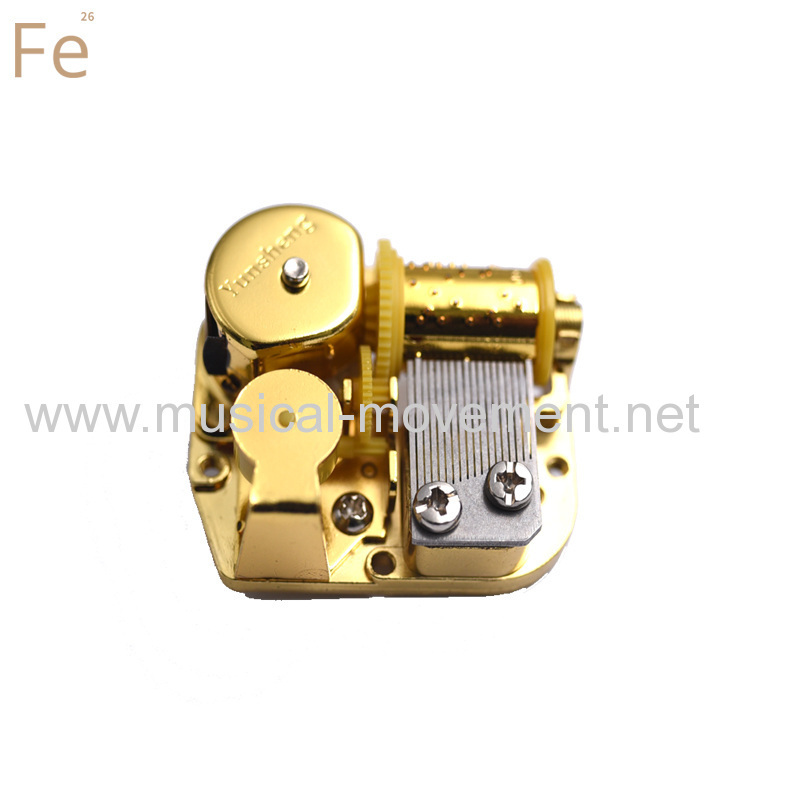
The mechanical music movement is a timeless classic with a history spanning hundreds of years. It originated from the British royal family, initially designed as large-scale installations. As the Swiss watchmaking industry flourished in the following years, it optimized mechanical music movements drastically — downsizing their structure and laying a solid foundation for mass consumer use.
Japan later industrialized music movement production, greatly boosting productivity and cutting manufacturing costs. This made traditional mechanical music boxes affordable everyday commodities, leaving precious childhood memories for people, especially kids.
Subsequently, China brought innovative upgrades to the production craftsmanship of music movements, further improving production efficiency and fueling the global popularity of classic mechanical music boxes. Today, China has become the world's largest production base for music movements, with Ningbo as the core manufacturing hub.
Music movements come in a wide range of specifications. For newcomers to the industry, picking the right music movement can be confusing. Below we break down how to choose the ideal unit from 7 key dimensions: power mode, size, price, appearance, extra functions, music tunes and customization, to help you make a wise selection.
1. Power Mode of Music Movements
There are 4 mainstream power types for mechanical music movements:
A) Spring Driven
The most traditional and classic design, working exactly like a mechanical clock with a built-in winding spring.
B) Hand Crank Driven
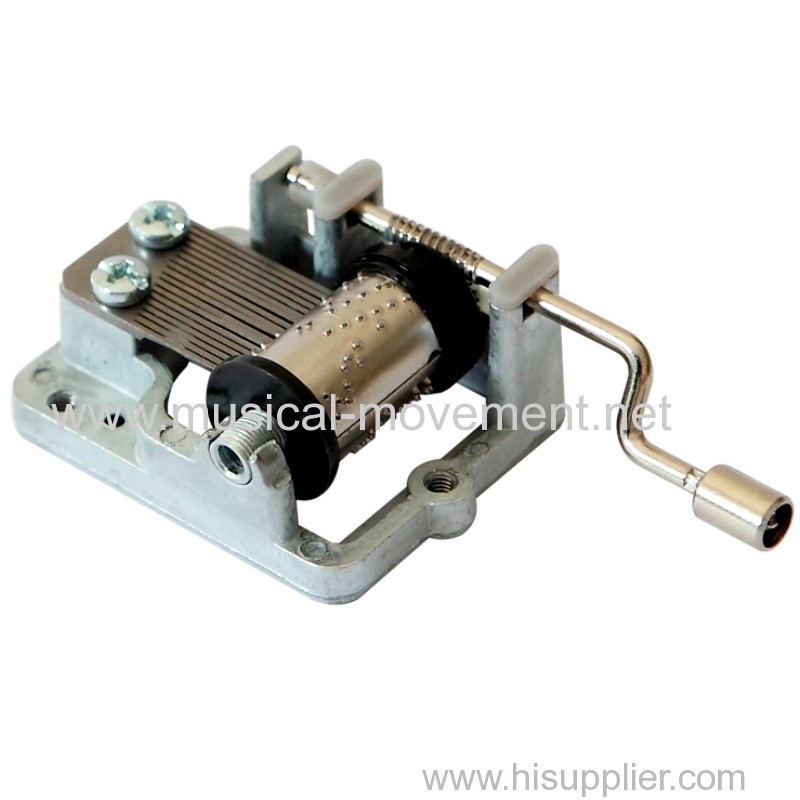
No spring structure; fitted with a manual crank lever to play music by hand rotation.
C) Electric Motor Driven
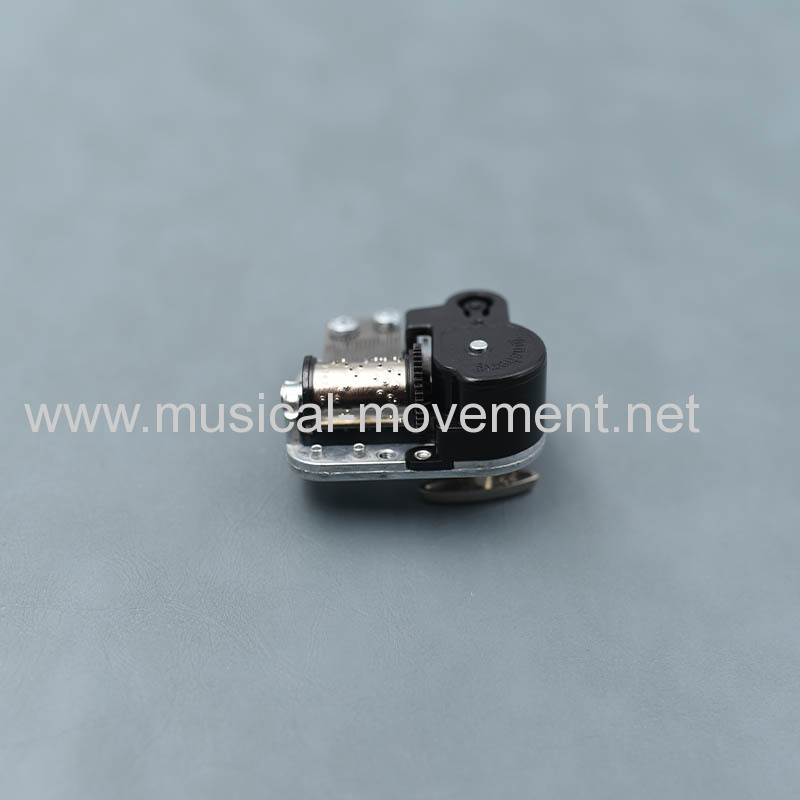
Equipped with a 1.5V or 3.0V electric motor, powered by batteries or other matched voltage power supplies.
D) External Power Driven
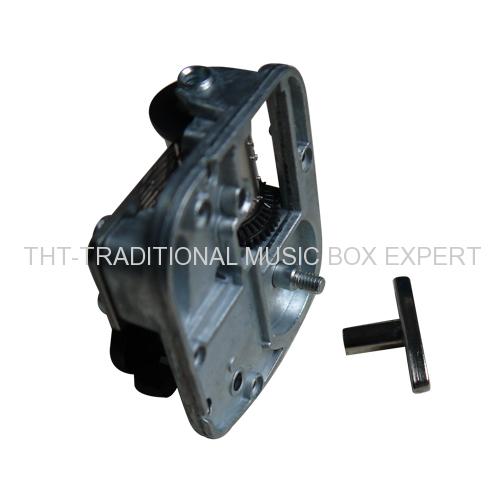
Designed with a power input shaft to connect any matched external power source, widely applied in cuckoo clocks.
THT's Tip: Choose the drive mode based on your music box project. Hand crank and spring driven movements are the top picks for children's toys, bringing more interactive fun for kids.
2. Size of Music Movements
Music movements are categorized into 4 mainstream sizes:
A) Standard 18 Note Movement: Standard dimension 51×45×22mm
B) Mini 18 Note Movement: Standard dimension 37×29×12mm
C) Large-size Movements
Available in 30 Note, 36 Note, 50 Note, 52 Note, 72 Note, 78 Note and 156 Note versions. The more notes it has, the larger the overall size.
THT's Tip: The standard 18 note music movement is always the first choice — it offers the best cost performance, abundant music tune resources and faster lead time. Opt for larger versions only if the standard size does not fit your design or you target high-end product positioning.
3. Price Range of Music Movements
- The standard 18 note movement boasts the highest cost performance. Thanks to highly universal spare parts, automated robotic production and massive global demand, its manufacturing cost is well controlled. The bulk wholesale price generally ranges from USD 1 to USD 3, varying with order quantity.
- Mini music movements feature higher difficulty in parts production and manual assembly, with a price range of USD 2 to USD 5.
- Large high-end music movements adopt brass music cylinders with gear carving, surface finishing and electroplating, all handmade for a premium look. Their price varies greatly:
30 Note: USD 100 – USD 200
50 Note: USD 200 – USD 300
Higher-note versions (52/78/156 Note): Even over USD 1000
THT's Tip: Prioritize standard 18 note movements, and match the price grade according to your product positioning.
4. Extra Functions of Music Movements
Common optional additional functions:
- Various brake functions: Knob brake, wire brake, ballerina brake
- Rotation functions: Rotating shaft, metal rotating disc, magnetic rotating stand for dancing figures
- Linear motion device
- Swing motion device
- POP UP Bounce device
THT's Tip: Select extra functions according to your music box product design.
5. Appearance of Music Movements
- The standard 18 note movement features a black plastic spring box and governor bracket, with a grey raw metal base. There are also full metal gold-plated versions at a higher price.
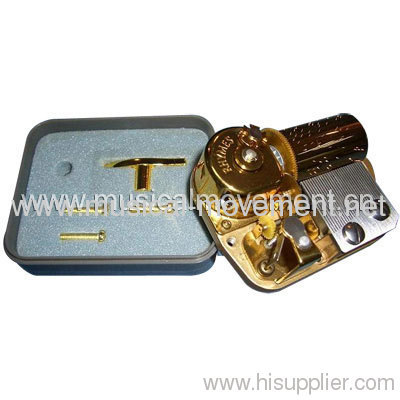
- Large high-end movements are usually fully polished with gold or silver electroplated finishes.
THT's Tip: If the movement is hidden inside your music box, stick to the standard 18 note model — same premium quality at lower cost, no need for expensive gold-plated full-metal versions. If the movement is exposed and your product targets the high-end market, choose gold-finish 18 note movements or large premium movements above 30 Note.
6. Music Tunes of Music Movements
A music movement consists of two core parts: the mechanical body (covered in the above 5 points) and the music tune — the soul of the movement.
The 18 note movement has the richest music resources. For instance, Yunsheng music movements have developed over 7,000 melodies. Excluding customized tunes under copyright protection, over a thousand classic and popular tunes are available for selection.
Standard 18 Note: Melody duration within 20 seconds; 2~3 minutes loop play after fully wound
Mini 18 Note: Melody duration within 15 seconds; around 2 minutes loop play
Large Movements:
30/36 Note: About 30 seconds melody, 4 minutes loop play
50/52/78 Note: About 50 seconds melody, 5 minutes loop play
THT's Tip: If you pursue rich music options, standard 18 note is your best choice. Make other selections based on your project demands.
7. Customization of Music Movements
Customization falls into two categories:
- Mechanical Structure Customization: Custom movement color, knob length, additional functions and more.
- Music Tune Customization (the core soul):
You need to provide MIDI files, staff scores or other audio files. For standard 18 note movements, a MIDI file or staff score within 20 seconds is required.
Brands like Yunsheng provide handmade sample confirmation before mold opening to avoid errors. Most manufacturers (including SANKYO) confirm customized tunes via MP3 or MIDI files.
- Custom Cost:
Standard 18 Note: The music cylinder is mold-produced, with total customization cost per tune at USD 300 – USD 500 (including melody development + mold fee). MOQ is usually over 1000 pcs.
Large Music Movements: Handcrafted music cylinders with no mold fee, melody development cost ranges from USD 200 – USD 400.
THT's Tip: Customization involves relatively high costs. It is recommended only if you have sufficient budget and large order quantity.
We have shared the 7 core selection guides above. Feel free to contact us via email for further professional consultation and business cooperation.